January 3, 2011

January 1, 2011
My Review of Mountain Hardwear Callisto Jacket - Women's
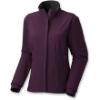
A Favorite
Fit: Feels true to size
Sleeve Length: Feels true to length
Chest Size: Feels true to size
Pros: Comfortable, Breathable, Warm, Durable, Lightweight
Best Uses: Casual Wear, Hiking and Camping, Cold Weather
Describe Yourself: Avid Adventurer
Was this a gift?: No
September 5, 2010
Rainier Report: Muir to the Summit
Outside the hut the sun had barely disappeared from the horizon, and it was warmer than normal at Muir that night. (I’d guess 40-45 F.) All our afternoon preparations made getting up and out a quick, almost mechanical routine: helmet, harness, crampons, pack, clip in. My blood sugar was rock-solid, but I played it conservative, reducing the basal and devouring a bar while putting the harness on. The next task was to keep things from freezing: I took the freestyle out of its case and slipped it in my pants pocket; as for the pump, I had planned a more elaborate system involving a passport pouch around my neck (good suggestion though David!) and hand warmers, but right before we left, I decided to do what any true-blue diabetic woman would do and just dropped it in the sports bra.
I started out in just base layers—capilene t-shirt with a long sleeve over it, my NF climbing pants, and long underwear. (Better to start a little chilly and let the climb warm you up, than overheat in the first mile and have to stop soon after to shed layers.) The first section of the climb was a straightforward hike across the Cowlitz Glacier. We kept the same rope teams that we practiced with the previous day, but for the summit climb the other rope took the lead. (We used walkie-talkies to communicate along the trail and would meet up during rest breaks.) The moon was out, but most of the dramatic landscape was reduced to shadowy silhouettes or completely hidden in the darkness. The only thing you could see clearly was the ground at your feet and whatever was in the beam of the other headlamps. An hour or so after leaving Muir, we reached the first of two rocky outcroppings, called Cathedral Rocks. The trail, after winding its way up through a gap in Cathedral Rocks (i.e. Cathedral Gap), evens out at 11,000 feet onto a wide snow plain called Ingraham Flats, the no-frills base camp for tent campers who would blue-bag it in return for a thousand-foot head start on summit night. It was around midnight, but the camp was alive with climbers preparing to head out. The wind was also picking up, so during the quick stop, I threw on the Patagonia pullover. Here, I tested in at 270. It came as a surprise because I’d been vigilant for lows this whole time and felt great. It could have been the bar at Muir, too much basal reduction, adrenaline, or any combination of the above. I only took a little more than half of what my pump suggested for correction, drank lots of water, and then got moving again to keep ahead of the impending onslaught from Muir and Ingraham.
The next section of the climb took us through Disappointment Cleaver, that 1,000-foot speed bump no one particularly enjoys, unless you’re a mountain goat or a rock collector. Of course, at first the terrain is an interesting change from the monotony of the snow-covered path, and scrambling by headlamp up a giant pile of boulders, ledges, and loose rock that resembles another planet is definitely a novelty. However, the novelty wears off very quickly (as the beautiful tune of steel crampons grating on rock reverberates through your skull), and you keep asking yourself if this was someone’s idea of a sick joke to run a route up the DC and then designate it as the standard route up Rainier. Reminds me of the British at Gallipoli.
About two-thirds of the way up the Cleaver, I felt myself slowing down for no good reason. I thought it might have been a lingering high blood sugar or perhaps trickier terrain, but I quickly realized it wasn’t the Cleaver, altitude, or dehydration—it was the correction dose from Ingraham Flats running me down like a freight train. On the mountain, I found it was much harder to distinguish between highs, lows, altitude, and general fatigue because they all had the same symptom: tired. I yelled up to Doug that I might be low, and he asked if I could hold out until we got to a safer rest spot above the Cleaver. We were only twenty minutes away, so I lowered the basal rate and ate what I’d thrown in my pocket. But not long after, it was clear that fighting the low was becoming more work than the actual climb. (Ordinarily a few minutes wouldn’t have mattered, but climbing drains the reserves much faster.) I asked Bobby, behind me on the rope, what he thought, and he also suggested we stop for a few minutes to test. More than anything else, I was more frustrated at having to stop so close to the top of the Cleaver, but the benefits of analyzing where I had come BG-wise since Ingraham, getting some quick sugar if needed, and regaining my strength far outweighed the momentary nuisance. I’m not sure how accurate the meter was, but it read 37. I didn’t feel that low but was certainly headed in that direction. No matter what, the treatment was the same: down as many shot bloks, gu packets, and/or sports beans in each mountful as humanly possible, and figure out the mathematics of it above the Cleaver. On a mountain, highs are always and incontestably better than lows. Another type 1 climber I know named Sebastien gave a sterling explanation, saying that he wasn’t looking to lower his A1c on the ‘08 Everest climb, but rather to err on the high side to be safe. I have come to appreciate that bit of advice. It’s not often I’d say this, but right then and there at 12,000 feet, I would have given anything to be 300.
It was a straightforward fix that I didn’t need any help with (as it is at sea level), but Bobby sat down beside me in the snow and while I knocked back the carbs, and we bounced ideas back and forth about what caused the low and how to cut the chances of another for the remainder of the ascent. I’m not used to having a sounding board, but it was incredibly helpful to get input from a veteran of diabetes and endurance sports. Had I been alone, I would have turned the basal down 70-80% and continued on, but Bobby suggested cutting the basal completely for the duration of the summit push. The thought of thoroughly eliminating the possibility of another insulin-induced plummet was appealing, yet I wasn’t a fan of the all-but-inevitable high that would sooner or later result from a barrage of bars, gels, and shot bloks tooling around my bloodstream. Nevertheless, at 37 (with a mouthful of glucose tabs and stock in the ClifBar company), my case to Bobby that I hated highs was just about as pointless as the Sicilian Campaign of 415 bce… In the span of five minutes, I was back in business, headed blissfully toward a three(hopefully not four)-digit BG, and ready to kiss the DC goodbye.
We reached 12,300 feet at around 3:30 am—a milestone for sure, but elevation-wise we were just about halfway. If you’re an optimist, you can tell yourself that in terms of straight distance, you’re now quite close (~1 mile or so) to the rim of the crater. And if you’re less of an optimist/live in the real world, you realize the remaining 2,110 vertical feet is gained in an unreasonably short distance through a combined force of 45° slopes and switchbacks ad tedium. It was still dark out on the Emmons Glacier, and I honestly don’t remember much from that section of the climb. (It’s hard to write a descriptive masterpiece when the extent of my material is as wide as the beam of a headlamp!) The upper slopes of the mountain were definitely colder and more exposed to the fine Northwest breezes; so electing to add another layer during a break, I pulled out the toasty NF fleece jacket and realized the shortcomings of my layering strategy. (At Ingraham Flats, I had thrown on the Patagonia windproof outer layer since I didn’t need a whole lot of insulation just yet. Now I did.) Faster (and windier) than Clark Kent in a telephone booth, I dropped my pack, whipped off the pullover, threw on the fleece, un- inside-outed the pullover, and put it back on over everything else. The whole process itself warms you up. (And then you try to take a victory swig from the camelback and realize it’s frozen solid.)
There’s a Zen-like place one reaches after a few hours on the mountain, in which climbing becomes semi-automatic (not the weapon). “Establishing a rhythm,” is how I heard it defined, and it very well might be the second cousin of the runner’s high or perhaps the great uncle of “being in the zone.” The physical demand is still there, but it recedes to the back of your mind and becomes almost mechanical. At the end of each switchback, you round the corner, step over the rope, transfer the ice ax to your uphill hand, take a couple steps, and pause to make sure the person behind you has time to do the same. The first few times are slow-going and not too graceful, but it’s just like the first car I ever drove; you figure out how to make it work. I got a lot of quality thinking, pondering, and reflecting done at 13,000+ ft. It’s strikingly tranquil and refreshingly primitive on upper slopes of the mountain. (Reminds me of Joseph Conrad without the band of man-eating natives.) When we came to a steeper section, I found a nice strategy. I thought of a friend or family member, like my Cousin Norm (a WWII veteran in his mid-eighties and who swore that if he were a few years younger he’d come with—I took his picture to the top with me); and I would tackle a section for every relative, friend, sponsor, and iD donor until I hit the top. The best part came around 4:30 am as we neared the final steep climb to the crater rim. I’d never been so happy (or so awake) to see those first gray shadows of dawn. The landscape gradually revealed itself in greater definition, and it was eerie to suddenly become aware of just how high we had come and take in all the stunning landscape of rock and ice that we’d passed on the way up. (The cleaver was a different ballgame going down, when we could actually see what was over the edge and how far down it was.) ...continued shortly!
August 11, 2010
Rainier Report: Camp Muir
-A.C. Warner, Expedition Photographer, 1888*
The first successful ascent of Mt. Rainier was made in August 1870, by the climbing pair of Hazard Stevens and P.B. Van Trump (great names). Eighteen years later a team of nine, led by Van Trump, set out for the summit. Arthur Churchill Warner, a twenty-four year-old photographer from Seattle, was invited to come along. Says one of the expedition’s more well-known members:
We were in light marching order, save one who pluckily determined to carry his camera to the summit. At night, after a long easy climb over wide and smooth fields of ice, we reached a narrow ridge, at an elevation of about ten thousand feet above the sea, on the divide between the glaciers of the Nisqually and the Cowlitz.
-John Muir**
When John Muir arrived at 10,080’ in August 1888, there was no welcome wagon—no public shelter, no climbing rangers with the latest weather forecast, and no solar toilet equipped with an industrial-size bottle of Purell inside. The view hasn’t changed much though—just a bit more foot-traffic and bit less of Mt. St. Helens. The best part of Camp Muir is undoubtedly the 10,000’ panorama, with Mt. Adams, Mt. Hood, and Mt. St. Helens all gracing the skyline—a view which, up until that point, you hadn’t really noticed since you’d been doggedly focused on boot-tracks in the snow ahead, the speck of a stone shelter, William McKinley (or was it Cleveland…?), and glissaders flying by, bent on cheeseburgers and beer, sleep, and a shower (most likely in that order). And if the view didn’t take your breath away, being at 10,000’ might. But by far, the best part of the breathtaking view was the satisfaction of finding a nice rock, cracking open a Mountain House dehydrated Santa Fe Chicken and Beans dinner, and serenely watching all the other intrepid hikers and mountaineers battle their way up the mountain and through the Tredmill—and as they drew near enough, perhaps offering a friendly “you’re almost there!” wave. What would John Muir have thought?
My Muir moment was interrupted by a 21st century reminder tune from my Animas pump saying the insulin had run out. I lingered awhile longer watching the sun sink lower, the “Camp Muir lassitude” winning out (read The Ascent of Rum Doodle). Three or four (perhaps five) reminders later, I finally got up to assemble the legions of diabetes supplies sitting at the bottom of my pack (the sole motivating factor being the necessity of more insulin to cover a surplus of trail mix threatening to overwhelm the system). The duct tape over my pump site was also hanging by a thread—high time to start afresh. Bobby made room for me on the bench in front of the shelter, and I laid everything out just like home—insulin bottle, alcohol swab, reservoir, tubing, and inset30. That’s when the epic diabetes conversation began. It reminded me of the conferences my parents used to bring me to, where criminologists from across the country would disappear into ballrooms, meeting rooms, and hotel bars to discuss the finer points of academia (while all other laypersons steered clear and kept the real world turning in their absence).
After eating a little hardtack, each of us leveled a spot to lie on among lava-blocks and cinders. The night was cold, and the wind coming down upon us in stormy surges drove gritty ashes and fragments of pumice about our ears while chilling to the bone.
-John Muir
The public shelter at Camp Muir does just what it needs and nothing more. When you compare it to the accommodations John Muir had when he came here, we’re talking a vast improvement. It’s about the size of a spacious Lincoln-era log cabin and, according to the NPS, supposedly has room to comfortably cram in twenty-five climbers— meaning: normally there aren’t that many; in a bind, you can really sardine folks in there; but no matter what, the NPS would like you to become comfortable with your neighbors.
There weren’t that many climbers in need of accommodation, so our team alone took up half the shelter. I laid out my sleeping bag and ground pad in the middle of a long wooden platform on the lower level of the bunk, and two of the women from the team that I climbed to Muir with took the spots on either side. Camp Muir is by no means a normal community—the camp quiets down after dinner, and most people are in their sleeping bags by sunset. I’ve pulled my share of late nights at William and Mary, but I don’t think I made it past 10 pm that night.
7/19/10: An iPhone alarm went off at midnight, and I opened my eyes as a group of guys on the other side of the hut sprang into action in the darkness. The first thing I thought was boy, I’m sure glad I don’t have to move from this sleeping bag. And then I did what most type 1 athletes do when they have nothing else to do: pulled my meter out and tested—without moving from the sleeping bag. 49. Bummer, now I had to move from my sleeping bag to my backpack on the shelf across from the bunks (about two feet give or take). But I was motivated by sports beans and chocolate protein bars—even at midnight. (Must’ve been the effects of the hike, plus overcorrecting at dinner for all that trail mix. I set a lower basal rate for the rest of the night.) Being low is no fun, but there’s nothing quite like eating jelly beans and chocolate in the middle of the night—love it. Try it sometime. As I sat there on my sleeping bag, trying not to overcorrect the low, I took in all the preparations happening on the other side of the shelter by headlamp—quite daunting to believe that would be us in less than twenty-four hours. After not more than fifteen or twenty minutes, the heavy wooden door creaked open. With the sound of crampons on concrete, stray beams from headlamps, [and a hearty heigh-ho Silver!] the climbers disappeared into the night.
We all got to sleep in that morning, but somehow I managed to be the last one up and out of the hut. (Being a college kid, I have learned to value any opportunity to sleep. ;) I had only a handful of trail mix for breakfast because somehow I ended up a little high when I woke up… couldn’t blame it all on dawn phenomenon, I guess. That morning, we practiced skills, roped up for the first time and took a walk across the snowfield, and went over crevasse safety. Some highlights:
Self-arrest: A site was chosen to practice basic self-arrest technique—it was a short, steep bowl of snow that flattened out nicely around thirty feet down. A bit steeper than what we’d practiced on during the winter course in the White Mountains, but I recalled the steely Boston accent of my Mt. Washington guide Jim, and his crash course on self-arrest (…oh man, bad pun). Jim, you taught us well.
Though, perhaps I was rusty after two years because the first time down was abysmal (sorry Jim!), and I ended up at the bottom with a crampon-sized hole in my climbing pants. Decided to go with gaiters from there on out, and the second try was better.
Roping up: The real test came when we roped up into teams of five to practice glacier travel. My rope team had Doug in the front, me behind him, then Bobby, Laura, and Jo bringing up the rear. We walked down to the bottom of the bowl and followed Doug a few hundred yards along a low traverse. We reached the end of that, and Doug turned around and instructed us to descend a few yards down the slope. I took one step and was kicking my boot into the snow to gain a better footing, when all of a sudden the soft snow gave way and I started sliding down the hill. Had I kept going, I would’ve just ended up at the bottom of the small hill, but I thought, might as well make use of the opportunity; so I turned over and drove the pick of my ice ax into the snow underneath me, and a few feet later came to a halt exactly where Doug had pointed…only the method was a little more direct. I was congratulated on a nice, albeit spontaneous, demonstration of technique, and I think I heard clapping coming from the other rope team across the hillside.
Crevasse stuff: We spent the next hour or so alongside a respectable-looking crevasse, learning the basics of crevasse rescue and each person’s role in the process. (For more info, refer to the Glacier chapter of Rum Doodle; essentially the same, just without the champagne. ;) We even got to tie into a snow anchor and peer down into the crevasse. It wasn’t what I expected—instead of a clear-cut chasm straight down to the base of the glacier, it was a complicated maze of twists, turns, and overhanging ice formations. While we waited our turn to hang over a crevasse, my rope team assisted in assembling a formidable team of snowmen, safely roped together with prusiks (see below).
The rest of the day was spent organizing gear, packing, refilling water bottles, and eating an insanely early dinner. Most of the team turned in before sunset.
There was a strong north east wind and our camp was not well sheltered. Dan and I dug a hole in the sand, then got some large flat stones or lava, piled them up so as to make a house; we used our Alpine staffs to form joists to lay stones on, so we had a very nice little house that we could sleep in and keep warm…the others rolled up in their blankets and were cold all night. We did not sleep much but talked most all night. Dan and I made fun of the rest and kept them laughing. I was the only one who was not sea sick.
-A.C. Warner
I didn’t sleep much that evening (don’t know anyone who did)—and anyway, it didn’t really get dark until around 8:30 pm, an hour before we were supposed to get up. However, if there’s one thing that a windswept rock ledge at 10,000 feet is good for, it’s self-reflection. Camp Muir is no Shangri-La, but I can understand why they build monasteries on cliffs. Life is simpler up there, and I think hiking or mountaineering in general gives you a lot of opportunity to think. I would’ve preferred to sleep, but might as well make use of the opportunity. :) I thought about how exactly one year ago to the day, Peter and I hiked to the top of Mt. Elbert in Colorado (a mere 23 feet higher than the summit of Rainier!), and exactly a year before that, was my first triathlon—just a sprint-distance—back home along Lake Michigan. Never planned it that way, but I’m starting to like the tradition.
I thought I’d be more nervous about the climb ahead, but for some reason the mountain seemed less daunting from halfway up than from afar. All the preparing, training, and outfitting were over, and all the unnecessary things that make their way into your life at sea level were left behind, far below. (You don’t really realize how unessential cell phones, computers, Facebook, and the five-o’clock news are until they’re gone, and you start to think Van Trump, Muir, and Warner had something right.)
However, my desire for at least a couple hours’ sleep finally won out, and I became the anti-Muir, digging out my iPod from the bottom of my pack (don’t even know how it got there…:) and turning on an audiobook: Virgil’s Aeneid. The Aeneid is my favorite book in the world right now, and for some reason, Virgil is the only thing that I can listen to during a hard workout at the gym and when I’m trying to fall asleep at night. Varium et mutabile semper femina. Try it sometime.
*Transcribed from "John Muir's Ascent of Mt. Rainier" (As recorded by his photographer, A.C. Warner). (1956, December 28). The Mountaineer 50 (1), 38-45. http://content.lib.washington.edu/warnerweb/essay.html
**Chapter 20, Steep Trails by John Muir http://www.yosemite.ca.us/john_muir_writings/steep_trails/chapter_20.html.
July 27, 2010
Rainier Report: Paradise to Muir
By sharing this narrative of climb, posting a record of my blood sugars, and providing a glimpse into the training, gear, and preparations, I hope that you will not only take my word for it but go out and see for yourself!

 The first time I saw Rainier up close and personal was shortly after we entered Rainier NP and were winding up the road to the trailhead at Paradise. It was stunning to see but even more remarkable to realize we would be all the way up there and back in the next three days. Our crew of four arrived at the Paradise (5,420’) around 9 am, and met four others from the team as we gathered our gear together in the parking lot. The remaining two decided to make the hike to Muir the day before and spend an extra night (and save us some good spots in the shelter!). The other members of the team were all from Washington State but came to Rainier with varying degrees of mountaineering experience and athletic backgrounds. (One member of the team, Gerhard, was a ski mountaineer from Germany who decided to ski all the way up to Muir and then back down from there two days later. Don’t ask me how he did it—it was neat to see though...until he flew by us on those skis and disappeared up the trail!) The whole group of ten was friendly and easy to get along with, open to learn, and highly motivated. (A good sense of humor helps too, and we had that taken care of.)

 The trail to Camp Muir is around four miles and gains 4,500 feet along the way. As the hike


 My middle school club soccer coach always used to tell us— right before making us sprint up and down this mean hill zillions of times, or as we played through driving rain, covered in mud, trailing a tough team, with all the parents watching comfortably from their cars (except my dad who once stood there holding up the broken leg of our popup rain shelter for an entire game)—my coach would always yell, “It’s all mental!” (He had served in the Marines). Well Coach, ten years and 14,410 feet later, I’m finally starting to believe you. (As long as you don’t make me sprint that hill again.)


July 23, 2010
14,410'

More to follow shortly, but here's the short version:
The entire team made it to the top and back down safely- including two type 1s! We reached the summit of Rainier at 5 am on July 20th, after heading out from Camp Muir (10,080') at around 10 pm the night before. Couldn't have asked for better weather for the three-day climb, and the BGs were stable from the top of Disappointment Cleaver (12,300') onward. Next to my name in the summit register, I wrote:
"...Type 1 diabetic-- summitted for Insulindependence!"
Still in the midst of translating the journey into words, but I'll have it down by the end of the week. In the meantime, a quick thank you to the climbing team and my friends at Black Diamond, Patagonia, Polartec, and Backbone Media for your generosity and support of my climb for iD!
July 2, 2010
News Flash
Unbelievable heights - Racine native to raise money for diabetes by climbing Mount Rainier
By Paul Sloth